Self Defense: Complete Guide to Effective Martial Arts

Self Defense: Complete Guide to Effective Martial Arts
Imagine walking alone at night to your car. You hear footsteps behind you getting faster. Your heart races. Would you know what to do if someone grabbed your arm?
Most people wouldn't. And that's exactly the problem martial arts solve: they don't just teach you techniques, they give you real confidence based on proven skills.
As an instructor with over 15 years training competitors for the Catalan national team, I've seen how people who had never trained completely transform their personal safety. In this guide, I'll explain which martial art to choose based on your goals and what you can realistically expect.
What is Effective Self-Defense
Effective self-defense isn't what you see in movies. It's not spectacular moves or secret techniques. It's the ability to react correctly under pressure using proven principles.
Self-defense that works has three components:
- Situational awareness: Detecting threats before they escalate
- Proven techniques: Movements that work under stress and adrenaline
- Physical conditioning: Stamina to handle a real situation
Martial arts are the best foundation for developing these three pillars because they're trained in real sparring situations, not in theory.
Sport vs Real Self-Defense
There's an important difference between sport martial arts and pure self-defense:
- Sport (competition): Has rules, weight classes, referee
- Real defense: No rules, may involve weapons, multiple attackers
Ideally, you train both. The sport foundation gives you solid technique and physical conditioning. Then you adapt those skills to real scenarios.
The Best Martial Arts for Self-Defense
After years of training fighters and people looking to protect themselves, here's my honest assessment of each discipline:
| Martial Art | Type | Base Time | Best For |
|---|---|---|---|
| Kick Boxing | Strikes + kicks | 6-12 months | Maintaining distance |
| MMA | Complete | 12-18 months | Total versatility |
| BJJ | Ground | 12-24 months | Control without strikes |
| Boxing | Fists | 6-12 months | Quick reaction |
| K1 | Advanced striking | 12 months | Knees and elbows |
Kick Boxing: Versatile Strikes and Kicks
Kick Boxing combines boxing punches with traditional martial arts kicks. It's probably the best option to start if you're looking for practical self-defense.
Why it works for self-defense:
- You learn to strike with fists and legs
- You develop reflexes and combat distance
- Excellent cardio and physical conditioning
- Direct techniques, no flourishes
In 6 months of consistent training, a beginner can have effective strikes and know how to move to avoid attacks. It's the fastest learning curve in combat martial arts.
MMA: The Most Complete Option
Mixed Martial Arts (MMA) combines striking (standing strikes), wrestling (takedowns), and grappling (ground fighting). It's the most complete system because it covers all combat ranges.
Advantages for self-defense:
- You know how to fight standing and on the ground
- You train transitions between distances
- Very realistic sparring
- Combines the best of each art
The disadvantage is it requires more time to master because there are more techniques. But if your goal is to be prepared for any situation, MMA has no rival.
BJJ: Control Without Needing to Strike
Brazilian Jiu-Jitsu (BJJ) specializes in ground fighting. Using leverage and positions, you can control and immobilize someone bigger without needing to strike them.
Why it's effective:
- Technique overcomes brute force
- Many fights end up on the ground
- You can neutralize without causing serious harm
- Excellent for smaller people
BJJ is especially valuable if you prefer not to strike or if for your job (security, nursing) you need to control people without hurting them.
Boxing: Speed and Effectiveness
Boxing focuses only on punches, but masters them at a level no other art matches. The reflexes, footwork, and ability to strike precisely under pressure are unmatched.
Benefits for self-defense:
- Fast learning curve
- Excellent defensive reflexes
- Power at close range
- Exceptional cardio
If you only have time for one thing, boxing will give you useful skills faster than almost any other discipline.
K1 and Muay Thai: Elbows, Knees, and Clinch
K1 (derived from Muay Thai) adds knees, elbows, and clinch to the arsenal. These are devastating strikes at close range that most attackers don't expect.
Characteristics:
- 8 weapons: fists, elbows, knees, legs
- Clinch for standing control
- Very powerful strikes
- Requires good physical conditioning
It's a step beyond traditional Kick Boxing. Ideal if you already have a base and want to expand your arsenal.
Self-Defense for Women
Women face different risk situations than men. Statistically, attacks often come from acquaintances, in enclosed spaces, and the attacker has a strength advantage.
That's why, for women, I especially recommend:
Brazilian Jiu-Jitsu:
- Doesn't depend on physical strength
- Effective from disadvantaged positions
- Escapes from grabs and ground control
- You can neutralize without striking
Kick Boxing:
- Maintain distance from the attacker
- Effective kicks without being close
- Quick strikes and exit
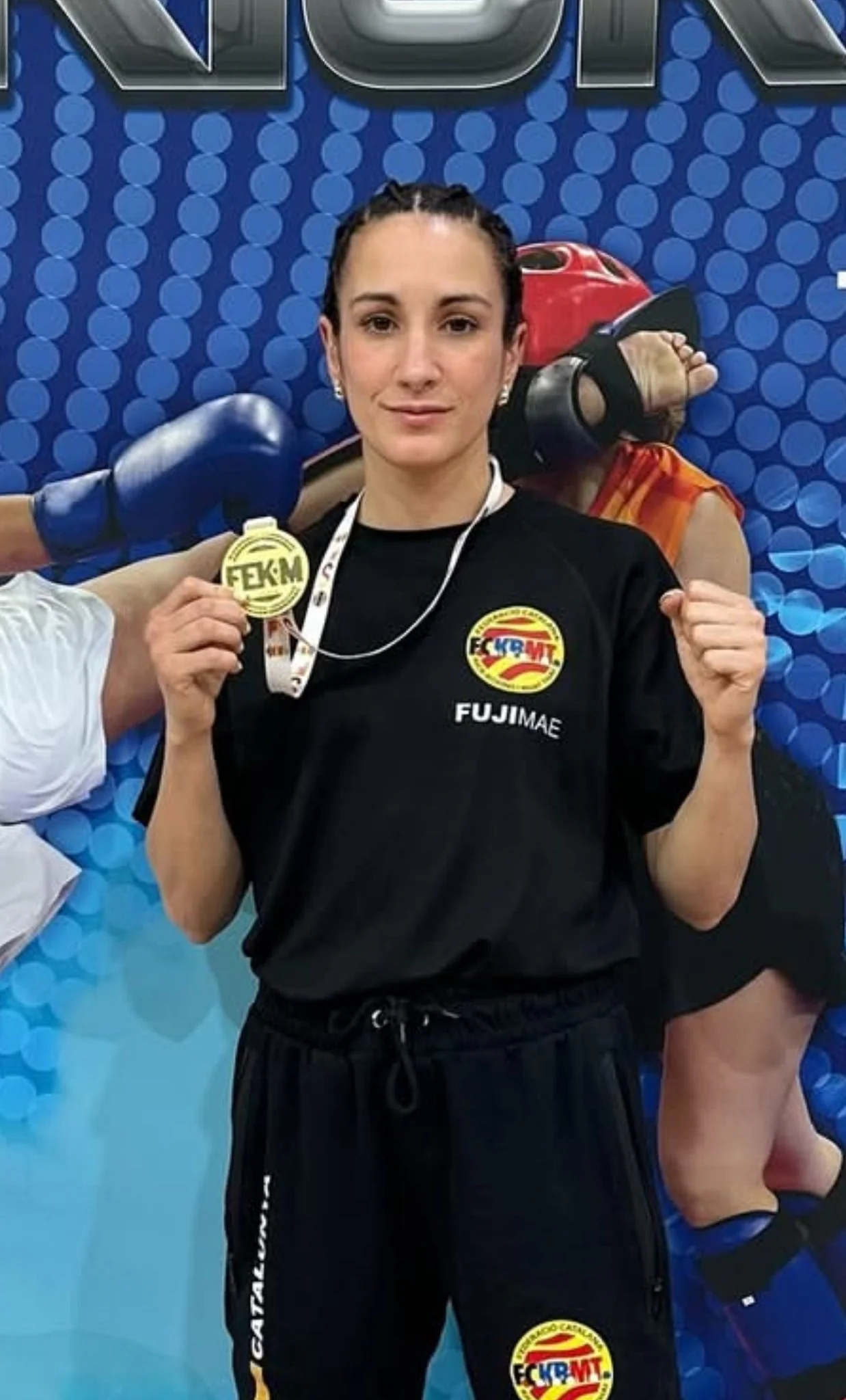
At Ryutai, we have students who started with no experience and today compete at regional level. The atmosphere is family-friendly and respectful, with instructors like Sheila Martínez (WAKO Pro European Champion) who understand the specific needs of women's training.
What Really Matters
Beyond technique, training self-defense gives you:
- Confidence: You walk differently, project security
- Awareness: You detect risky situations earlier
- Options: You know you can react if necessary
This confidence is the best deterrent. Attackers look for easy victims, not people who seem to know how to defend themselves.
How Long Do I Need to Defend Myself?
Let's be realistic about expectations:
3 months of training (2-3 days/week):
- Basic reflexes developed
- Correct posture and movement
- Fundamental techniques memorized
- Better physical condition
6 months:
- Automated techniques
- Sparring with partners
- Ability to react under pressure
- Notable confidence
12 months:
- Solid skills in your discipline
- Real combat experience (sparring)
- Ability to adapt techniques
- Prepared for real situations
The key is consistency. Training 2 days a week for a year is better than training 5 days for 2 months and quitting.
Why Train at Ryutai Viladecans
At Ryutai, we've been training people in martial arts since 2016. We're not a generic gym that added combat classes, we're specialists.
Our credentials:
- Instructors from the Catalan national team in Kick Boxing
- Active professional competitors
- More than 200 satisfied students
- 4.9 stars on Google Reviews
- 2 specialized locations in Viladecans (Barcelona area)
We offer Kick Boxing, K1, MMA, BJJ, Boxing, and Grappling. You can train one discipline or combine several.
No commitment and with a free first class so you can try without obligation.
Frequently Asked Questions
What is the best martial art for self-defense?
There is no single best martial art. Kick Boxing and Muay Thai are excellent for maintaining distance with strikes and kicks. BJJ dominates on the ground. MMA combines everything. The best choice is training something that motivates you to be consistent.
Can I learn self-defense without prior experience?
Absolutely. At Ryutai, 80% of our students start from zero. Classes are designed for beginners, with gradual progression and a family-friendly atmosphere.
Is training martial arts dangerous?
Training at a professional gym is safe. You practice with protective gear, sparring is controlled, and instructors constantly supervise. Injuries are less frequent than in football or running.
At what age can you start training?
From 4-5 years old with classes adapted for children. There's no upper age limit. We have students 60+ who started as adults.
How long do I need to be able to defend myself?
With 3 months of consistent training, you'll develop basic reflexes. At 6 months, you'll have fundamental techniques. After a year, real confidence for risky situations.
Is BJJ useful for street self-defense?
Yes, BJJ is very effective because many fights end up on the ground. You'll learn to control and neutralize an attacker without needing to strike them. Combined with striking, it's even more complete.
Which martial art is best for women?
BJJ is especially recommended because it doesn't depend on physical strength. Also Kick Boxing to maintain distance. At Ryutai, we have mixed classes with a safe and respectful environment.
Start Today: Free First Class
The best self-defense is the one you actually train. Not the one you read about online or watch on YouTube.
At Ryutai Viladecans we offer:
- Free first class with no obligation
- No commitment: month to month
- Flexible morning and afternoon schedules
- 2 locations in Viladecans (Barcelona area)
📞 Call us: 677 71 47 99 💬 WhatsApp: Contact now
The best time to start was a year ago. The second best time is today.
This article is informational. Martial arts should be practiced under the supervision of qualified instructors. Avoid risky situations whenever possible.
Tags
Share article

Ready to start your Martial Arts journey?
Join over 200 students already training with us in Viladecans. First class free, no commitment required.